
Breaking News


Fresh Killings in Barkin Ladi Spark Outrage as Groups Decry Deteriorating Security, Weak Humanitarian Response
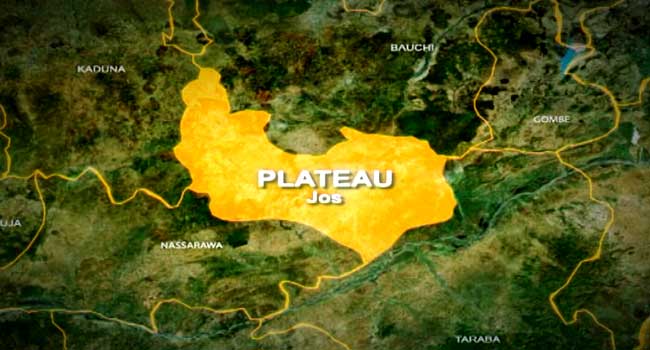
Yemi Kosoko in Jos
The security situation in Barkin Ladi, Plateau State, deteriorated further at the weekend as coordinated attacks on several communities left at least seven people dead, including a police officer, and several others injured.
The assaults, reportedly carried out by heavily armed attackers, occurred late Saturday across Sabon Layi, Rakung, Gangare and the General Hospital axis of Zat and Bet.
In a statement signed by its National Publicity Secretary, Rwang Tengwong, the Berom Youth Moulders-Association (BYM-A) condemned what it described as “consistent security failure” despite the presence of multiple checkpoints and personnel across Barkin Ladi town.
According to the group, the bodies recovered as of 1:00 a.m. Sunday have been deposited at the mortuary, while six injured victims are receiving treatment. The association reiterated its earlier vote of no confidence in some personnel of Operation Enduring Peace (OPEP), accusing them of negligence and inability to protect residents.
“Communities continue to come under coordinated attacks in broad daylight and at night without any swift or effective response from security operatives,” the statement read. “Residents now live in constant fear while armed attackers move freely across communities unleashing terror on innocent civilians.”
The group also criticised the Plateau State Government for what it called a weak humanitarian response to recurring violence. It questioned why the state has not established a Ministry of Homeland Security and Humanitarian Services, given the frequency of attacks and displacement across rural and urban communities.
The association lamented that traumatised residents are often left to evacuate corpses themselves, sometimes wrapping bodies in local cloths and carrying them with bare hands a situation it described as both “un dignifying” and “a public health risk.”
Echoing similar concerns, Dr. Solomon Chollom, a virologist and President of the Plateau State Association UK (PSA‑UK), warned that the state is now grappling with a “surge in humanitarian crises” driven by daily killings and mass displacement.
Chollom highlighted multiple layers of the unfolding emergency, including loss of lives and property, disrupted farming activities, unsafe handling of corpses, inadequate trauma care, and the absence of coordinated evacuation and referral systems for injured victims.
He questioned the visibility and effectiveness of the State Emergency Management Agency (SEMA), noting that victims are often left to search for bodies and rescue survivors without official support.
“With the frequency of these challenges, it may be time for Plateau State to consider a full‑fledged ministry on homeland security and disaster management,” he said. Such a ministry, he argued, would serve as a frontline responder, document attacks, manage trauma, evacuate corpses professionally, and coordinate temporary settlements for displaced persons.
Chollom stressed that while the primary responsibility of government is to stop the killings, failure to do so should at least be met with robust humanitarian intervention. “Government should be all over the place with social services to bring succour and hope to victims,” he said.
The latest attacks add to a long list of violent incidents that have plagued Plateau State in recent years, with communities repeatedly accusing security agencies of slow or inadequate response. Civil society groups, traditional leaders and humanitarian advocates have increasingly called for structural reforms, improved intelligence gathering, and stronger community‑security collaboration.
For now, residents of Barkin Ladi remain on edge as security agencies continue patrols in the affected areas. The Plateau State Government has yet to issue a detailed response to the latest criticisms.


