


For BJ the Revolutionary
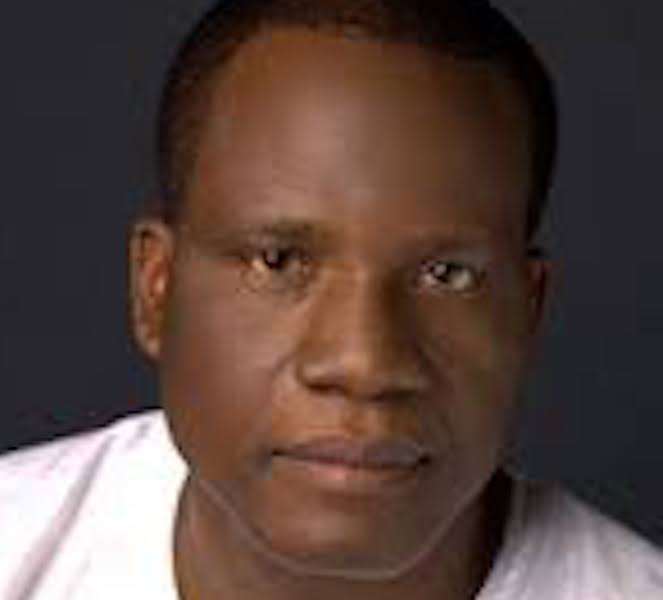
Kayode Komolafe
Comrade Biodun Jeyifo (BJ) whose body will be buried in Ibadan next Wednesday was a revolutionary till his last breath.
A day before the interment, members of his family, friends, colleagues and comrades will hold an evening of tributes in honour of the accomplished emeritus professor of African and African American Studies and Comparative Literature at Harvard University in the United States.
Since BJ passed away on February 11, it has been soul-lifting for his comrades to read the outpourings of testimonies about his life and times.
The common thread to these affectionate comments is that BJ’s exit from our midst is a huge loss. Indeed, it requires a multi-dimensional approach to explore the BJ phenomenon. This exemplary personality of BJ was manifested in his immense humanity, instructive humility and remarkable selflessness. For those who benefitted from BJ’s genuine kindness, the common saying that someone is “generous to a fault” would not be a cliché. By exhibiting in his life these virtues first and foremost as a human being, BJ was doubtless a great ambassador of the revolutionary movement, whose goal is to advance human progress. On this goal, BJ never wavered.
BJ’s revolutionary career was indubitably defined by consistency, commitment and clarity. It is noteworthy that when he turned 80 on January 5, he reaffirmed unequivocally his socialist convictions. A symposium was commendably organised by the Wole Soyinka Centre for Investigative Journalism to mark the Oak Jubilee of his birth. Responding to tributes from former students, friends, colleagues and comrades, BJ said that at 80 he was more convinced that “capitalism could not be entrusted with the future of mankind” given the deepening crisis of the incurably exploitative and dehumanising system. He exuded so much satisfaction at the most fitting forum in which the story was told of his childhood till he reached the apogee of his career. BJ thoroughly enjoyed himself with banters and fond memories recalled by his childhood friends – Iyalode Sade Ogunbiyi and Dr. Yemi Ogunbiyi among others.
As a leading light of the Nigerian Left, BJ would be remembered for his stupendous comprehension of Marxism and its application. Many years ago, BJ’s ideological soulmate, Comrade Eddie Madunagu,
made a remark in his writings which some might not have noticed. Madunagu listed BJ among some giants of the Left from whom he had benefitted philosophically in their comprehension of Marxism. Others in that list included Eskor Toyo, Bala Usman and Segun Osoba.
Now, BJ’s Marxism can be explained by reflecting on his exceptional life. In a 1913 essay, the leader of the Great October Revolution in Russia, Vladimir Lenin, identified “three sources and three component parts of Marxism” which remain valid today. The three components on the basis of which a Marxist could be assessed are philosophical, economic and political. As some friends and comrades of BJ have charitably acknowledged in their tributes, he was rigorous in professing Marxism, but he was also averse to cant.
The first component of Marxism is philosophical, that is dialectical materialism. BJ applied it in his daily life as well as his professional career as an accomplished literary scholar with global acclaim. As a cultural theorist, BJ embraced the materialist conception of history. In that wise, BJ could be called an able disciple of Karl Marx, who himself formulated the doctrine as follows: “It is not the consciousness of men that determines their existence, but their social existence determines their consciousness.” This was handy for him as a tool for literary criticism as it was a guardrail in his social relations. His dialectical approach was certainly a distinguishing feature of his highly respected scholarship. Even those on the opposite of a debate would appreciate the efficiency in his application of Marxist theory. However, BJ was not a vulgar atheist. BJ firmly respected the faiths of others and was at home with religious discussions. He was conscious of the imponderables of life. He devoted some space to this aspect of life in his journalistic writings. While he could not be described as a churchgoer (hence his funeral will be deliberately secular one), he professed what in Yoruba is put as “Iwalesin,” meaning character is the soul of faith. Without laying claim to any piety, BJ related humanely to fellow human beings (beginning with members of his extended family) in a way some born-again Christians may not be so credited with by others. His commitment to the struggle for a humane social order had this Marxist philosophical underpinning.
The second component is the Marxist political economy. In his writings, the conviction about socialist mode of production is unmistakable. Hence you would encounter his polemics against “predatory capitalism,” the rentier state” and the rejection of the “republic of poverty, inequality and misery” which the capitalist system breeds. He took his theoretical cue from that inimitable passage in Marx’s essay entitled “Critique of Gotha Programme”. In that essay, Marx formulated the socialist law of redistribution like this: “From each according to his ability, to each according to his needs.” That has been a socialist credo since 1875. BJ clearly made redistributive justice a battle cry in his life-long struggle against a system that normalises poverty and inequality. Little surprise, BJ the literary critic was so fond of a famous line from Shakespeare’s “King Lear” (Act 4, Scene1): “So distribution should undo excess, and each man have enough.” BJ took matters of political economy seriously as a Marxist. He was convinced that the structural basis of poverty and inequality in society could not be located without a good knowledge of political economy- the political motivations and consequences and economic choices. This is beyond technical economics. He was a good example of comrades who believed that a Marxist should be versed in political economy regardless of his formal training. Listening to BJ confronting the ideas of bourgeois economists in the policy arena was often reminiscent of the story of Fidel Castro and Che Guevera after the Cuban revolution. Castro offered Che the job of the governor of the Central Bank. But Che declined the offer reminding his comrade that he was trained as a medical doctor. Castro admonished Che saying, “I thought you were a Marxist.” As a Marxist, BJ had a good understanding of the dynamic of the political economy.
The third component of Marxism is socialist politics, the goal of which is the radical transformation of the society, economy and polity. The scientific method to achieve this is class struggle. It was on this score that BJ could never be dismissed as an armchair theoretician. He was not just a Marxist theorist; he was a man of praxis- the dialectical combination of theory and practice. BJ’s theory illuminated his action while action gave the theory historical relevance. In his late twenties, he embraced anti-poverty politics. He was a member of the Anti-Poverty Movement of Nigeria (APMON). Other members of the movement included Tony Engurube, Bene Madunagu, Edwin Madunagu, Gbolaga Akintunde and Charles Akinde.
At a point in his revolutionary career, BJ and some other comrades elected to live in a commune as a strategy of the struggle. Madunagu is the only living member of the group of scholars who embarked on that experiment which eventually collapsed. The story of the experiment has not been told.
With the reorganisation of the Academic Staff Union of Universities (ASUU) in the late 1970s, BJ became the president of the association. In his Volkswagen beetle BJ criss-crossed the length and breadth of Nigeria to organise this trade union of academics. With a radical leadership, ASUU got affiliated with the Nigeria Labour Congress (NLC) while Comrade Hassan Sunmonu was president. It was a period when an alliance of workers, progressive intellectuals and students was put into effect. BJ represented ASUU at the national executive council of the NLC. BJ was also active in the laborious efforts to build an organisation of the Left that could be formidable enough to be the vanguard of the struggles of oppressed and exploited. His thoughts were always about the organisational response of the Left to the Nigerian condition. His solid conviction about the class character of politics guided his practical steps.
In the last few years, BJ immersed himself in a project focussing on knowledge and record-keeping as part of the struggle. BJ exemplarily invested his time, energy and resources in it. That is the building of the digital Socialist Library and Archives (SOLAR) based in Calabar. The library currently warehouses thousands of books, papers and archives of some comrades including those of BJ himself. The provenance of the project was the donation by the Madunagus of their entire library and archives as the nucleus of SOLAR five years ago. Other comrades whose books, papers and records are part of SOLAR are Eskor Toyo and Curtis Joseph. Until his death, BJ was the chairman of the Board of Trustees and Board of Advisers of SOLAR. Even while he was hospitalised, BJ was still reminding comrades of the tasks ahead of SOLAR including embarking on occasional publications.
Finally (as BJ himself would say many times in concluding a speech), the comrade was never a pretender in the pursuit of the people’s cause. He was genuine inside out. His commitment was total.
No, he was never dogmatic. Yet one could easily locate BJ on the ideological spectrum. In matters of class struggle he stood clearly on the side of the oppressed and exploited. He confidently espoused his convictions as a Marxist revolutionary to the end. With the luxury of hindsight now, some of audacious steps taken in his younger days might appear idealistic. But to paraphrase one thinker, some of the positive realities of today were the utopias of yesterday. BJ unyieldingly held to his conviction that what could be dismissed as idealism today would become the reality of progress tomorrow.
May his dream of socialist transformation of Nigeria come true.


