
Breaking News


Sanwo-Olu’s Masterstroke in Lagos Politics of Succession
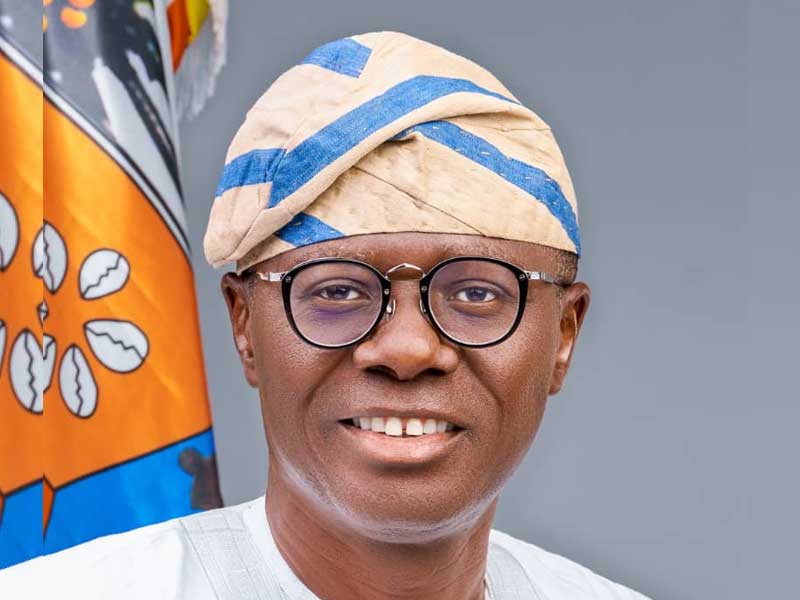
The seamless and overwhelming endorsement of the Lagos State Deputy Governor, Dr Obafemi Hamzat, as the governorship candidate of the ruling All Progressives Congress in the 2027 poll, has further affirmed the essence of Governor Babajide Sanwo-Olu’s politics of foresight and vision. Raheem Akingbolu reports.
In the often unpredictable theatre of Nigerian politics, succession is rarely approached with clarity. It is managed cautiously, spoken of in guarded tones, and too often defined by rupture rather than continuity. Yet in Lagos, Governor Babajide Sanwo-Olu has chosen a different path. It is as bold as it is deliberate.
By openly endorsing his deputy, Kadri Obafemi Hamzat, as his preferred successor, he has done more than make a political statement; he has altered a long-standing narrative. In a state where deputies have historically struggled to inherit both the confidence and political goodwill of their principals, this move stands out as a defining moment, a sharp departure from the past.
Perhaps the biggest accolade should go to President Bola Tinubu, who, as a father to all, laid the foundation of mature political family in the cosmopolitan city. Even though, like every political game, the process is wrapped in secrecy and known only to the inner circle, the handwriting is conspicuously written on the wall that the President’s influence must have given Sanwo-Olu and Hamsat the easy ride.
It is, depending on one’s vantage point, either a gamble or a masterstroke. But even that debate misses the larger point. What President Tinubu and Governor Sanwo-Olu have demonstrated is a willingness to confront an entrenched political myth: that outgoing leaders must, by instinct or design, distance themselves from their deputies at the threshold of succession. In choosing the opposite, Sanwo-Olu, in particular, has not only broken a jinx; he has redefined the expectations of leadership transition in Lagos.
At the heart of this moment lies a relationship that has quietly defied convention. For nearly seven years, Sanwo-Olu and Hamzat have operated not as rival centres of power, but as partners in governance. This is no doubt a purposeful decision, beautifully aligned and coordinated in execution. In a political culture where such arrangements often fracture under pressure, their continuity is both rare and instructive.
Hamzat himself offers perhaps the most compelling insight into this dynamic: “A lot of people refer to deputy governors as spare tyres, but I can tell you I was never treated as such by Sanwo-Olu.” It is a statement that carries weight beyond its simplicity. It speaks to a governing style that values inclusion over isolation, and collaboration over control.
That choice has proven consequential. By treating his deputy as an active participant in governance rather than a peripheral figure, Sanwo-Olu has effectively built capacity within the system. The endorsement, therefore, is not an act of convenience; it is the logical extension of a working relationship grounded in trust and responsibility.
More significantly, it challenges a long-standing pattern within Lagos politics. Historically, the office of deputy governor has rarely translated into succession. From Kofoworola Bucknor-Akerele to Olufemi Pedro, Sarah Adebisi Sosan, and Idiat Oluranti Adebule, the trajectory has been marked by discontinuity. Whether due to political divergence or structural constraints, the transition from deputy to governor has remained elusive.
It is against this backdrop that Sanwo-Olu’s decision acquires its full significance. It is not merely supportive; it is corrective. It signals a departure from a pattern that has, over time, come to define expectations.
If the governor’s endorsement set the tone, the response that followed has given it structure. The swift alignment of the Governor’s Advisory Council, the apex stabilising force within Lagos politics and key stakeholders of the All Progressives Congress transformed what might have been seen as a personal preference into a collective position.
In Lagos, such convergence is rarely incidental. It reflects a political culture that privileges coordination over fragmentation. Notably, no previous governorship aspirant in the state has enjoyed this level of early, visible, and coordinated support from across the political spectrum. What is unfolding is not merely endorsement; it is consensus, carefully assembled and confidently expressed.
Yet, even within this growing alignment, the origin of the process remains unmistakable. It began with Sanwo-Olu’s decision to act early and speak clearly. In doing so, he replaced uncertainty with direction and speculation with structure.
The final layer of validation arrived from the highest level. The endorsement of Hamzat by Bola Tinubu, delivered in the presence of the Governor’s Advisory Council, did not initiate the process. It crowned it.
The sequence is instructive. From gubernatorial endorsement to institutional consensus and, ultimately, presidential backing, what has emerged is a rare alignment across all tiers of political authority. It is a progression that underscores not only the acceptability of Hamzat, but the strategic clarity of Sanwo-Olu’s initial move.
In practical terms, this convergence sends a message of coherence seldom seen in succession politics. It signals that the pathway to 2027, at least within the ruling establishment, is not being contested in fragments, but shaped in unison.
Beyond the mechanics of politics lies a more enduring lesson in leadership. Sanwo-Olu’s approach suggests that succession need not be disruptive. It can be deliberate. It can be guided. And, crucially, it can be anchored in relationships that have been tested within the realities of governance.
By choosing to endorse his deputy openly, he has not only broken with tradition but also redefined it, demonstrating that continuity is strongest when it is built on collaboration rather than convenience.
In a political environment where many leaders leave succession to chance or conflict, this moment stands out as an exercise in foresight. It reflects a governor who understands that legacy is not only measured by projects completed, but by transitions secured.
As Lagos looks toward 2027, the outlines of the future are already visible. The signals have been sent, the structure has aligned, and the message is clear, consistent, and deliberate.
In breaking the jinx and reshaping the narrative, Sanwo-Olu has done more than endorse a successor. He has offered a model. He has set a new tone that leadership extends beyond tenure, and where the future is not left to chance, but carefully, confidently, and consciously defined.


