
Breaking News


Insecurity and Diversity Reporting
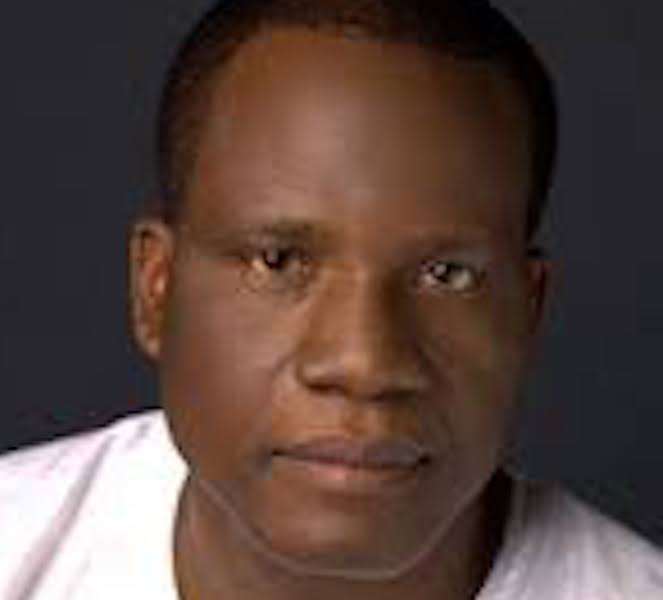
Kayode Komolafe
Terrorism is not a native crime of any ethnic group or religion in Nigeria.
Journalists are therefore not helping the cause of security when they, perhaps unwitting-ly, associate a religion or an ethnic nationality with terrorism, banditry, kidnapping, armed robbery or any other violent crime in their headlines. If anything, ethnic labels and stereotypes can only problematise the war against the criminals who have rendered parts of the country unsafe by their activities.
Criminals should be identified by their names. They could be associated with their cults, gangs or movements. But they should not be portrayed as representatives of the religion they claim to profess or the ethnic group to which they appear to belong by virtue of their names.
When you identify a terrorist by his ethnic group or nationality you risk politicising inse-curity. Emotions are stirred needlessly. Undue sympathies are generated for the crimi-nal. This could even cause an operational setback for the troops, police and operatives who are in the front fighting in the anti-terror war. It is often forgotten that the soldiers, policemen and other security operatives involved in combatting violent crimes belong to all ethnic and religious groups including the one some editors and broadcasters often as-sociate with the crime. Meanwhile, some of these gallant fighters sharing the same identi-ty with the criminals are killed or injured in the course of duty.
The trend of associating an ethnic group or religion with criminality is a symptom of the decline in diversity reporting. In the past, editors would be sensitive in their reportage to the fault lines of the Nigerian polity and society: religion and ethnicity. Hence the names of an ethnic group or religious body did not feature in the captions of crime stories. Edi-tors knew that you could not criminalise a whole ethnic group or religion because some of its members have committed crimes. The ethnicity or the religion of the criminal was, therefore, clinically avoided.
Instead of ethnic or religious label, you would likely read, view or listen to stories such as “the arrest of a 42-year-old armed robbery suspect, “a 33-year-old farmer charged with murder” or “the conviction of a 50-year-old businessman for fraud.” Rookie reporters were taught by their newsroom seniors about this mode of responsible journalism. Those were the days of journalism of restraint. Not anymore.
Today, the story of a terror suspect is not complete until it is written or broadcast as that of a “Fulani terrorist”. Pray, how does the adjective Fulani illuminate the story? The Fulani label would rather generate ethnic resentment. When a journalistic medium insists on qualifying every report of terrorism with adjective Fulani, it has veered from reporting to playing dangerous politics. This prejudice-laden reporting becomes more repugnant to rational minds when you also observe that the same medium does not report crimes with labels such as “Yoruba ritual murder suspect,” or “Igbo drug baron” or “Tiv bandit.” The Boko Haram insurgents originated in Borno state and was endemic to the northeast for a long while, but they have not been described as “Kanuri terrorists.” In publishing or broadcasting the story of a drug offence suspect the age, address and occupation are suf-ficient data to give the idea about the person of the suspect. Why are the same criteria not applied to reporting the heinous crime of terrorism?
Meanwhile, the material reality of the diversity of the Nigerian society is conveniently ig-nored: the Fulani people live in every part of Nigeria just as Nigerians of other ethnic groups live in communities with dominant Fulani populations in the northern parts of the country. This reality is legitimised by the Nigerian constitution. In such a milieu ethnicisa-tion of crimes could set one ethnic group against another ethnic group. What is, there-fore, the sense of giving a crime an ethnic label?
The matter is even made worse now that American politicians are taking a cue from the Nigerian media (and international media) to talk of “Fulani terrorists “and “bandits of the Fulani tribe.”
As an aside, it is a big shame that in the second quarter of the 21st Century you still find the insulting use of the word tribe in the Nigerian media. It is a sociologically illiterate cat-egory to employ in identifying any group of people in this age. Tribe is a pejorative word used by colonial and racist anthropologists to categorise African ethnic groups, nationali-ties and even nations. It doesn’t occur to Nigerians that Europeans and other westerners don’t call their ethnic groups and nationalities tribes. Have you ever heard of Scottish tribe or Quebec tribe?
To be sure, the contemporary recklessness in diversity reporting is not only a feature of the permissive social media, but it is also a trait observable on the pages of newspapers (including online publishing) as well as radio and television programmes.
It is astonishing that some editors and their reporters fail to see the dangers in reports replete with hate speech and crude stereotypes. When you tell some journalists that hate speech is a crime their retort is often that you are on the path of political correctness. Yet it is far from pandering to any group if one points out that it is utterly unscientific and ex-tremely irrational to cast a whole ethnic or religious group of millions of people in the mould of terrorists.
After all, no ethnic or religious group in Nigeria has ever held a plebiscite to endorse any form of crime committed by some members of the group. This is an indubitable truth.
So, the foregoing is certainly not a sermon in political correctness. It is simply a call for the application of a good dose of emotional intelligence in the way the media performs its du-ty. The real test is a straightforward one: a journalist should imagine how he or she would feel if his or her ethnic or religious group is demonised because some members of the same group (unknown to him or her) commit crimes.
The same 1999 Constitution, which assigns the media the professional duty of holding government accountable, also lists the promotion of national unity and integration as du-ties among the “fundamental objectives and directive principles of state policy.” Citizens are also expected to assist the state in maintaining “law and order.”
The fixation with ethnic and religious labels in reporting violent crimes is sometimes inex-plicable. Let us illustrate this point with a few instances. It is undeniable that a number those involved in terrorism are of Fulani origin. But when some pundits sum up their analyses of the security situation as “Fulani terrorism” they ignore the fact that not all the terror suspects currently standing trials in courts are of Fulani origin. The other day, Gov-ernor Charles Soludo of Anambra State said point-blank that those responsible for violent crimes in his state are fellow Igbo men. Virtually all those who have been tried for ritual murder in the southwest are Yoruba. There have been stories of even family members of the kidnap victims being implicated in the perpetration of the crime.
Long ago, the Sultan of Sokoto and the president of the Supreme Council for Islamic Af-fairs, Alhaji Muhammad Sa’ad Abubakar, declared that Boko Haram and other terrorist organisations do not represent the Nigerian Muslim community. The same position has been maintained by Muslim leaders across the country. Yet this has not put paid to the vicious insinuation of support for terrorism by Muslim leaders in some malicious segments of the public sphere.
Criminals should be treated as criminals according to the law. They should not be report-ed as if they are representatives of any ethnic group or religion. This is the point elo-quently made recently by a colleague, Samuel Aruwan, in a highly perceptive essay. Aruwan was commissioner for internal security in Kaduna State. The piece entitled “Re-framing Nigeria’s Banditry Crisis: From Emotional Narratives to Strategic Clarity” is rec-ommended for reading for its profound insights and rigour.
Those who downplay the implicit danger posed in putting ethnic and religious labels on crimes should ponder the Rwandan genocide. The catastrophe was enabled by print and electronic media which spread hate. The role of the Rwandan media also came up for scrutiny at the International Criminal Tribunal. The international media also mispresent-ed the tragedy that unfolded on ground while the local media set neighbours against neighbours with their publications and broadcasts. The Tutsi ethnic group was demon-ised. Every crime had a Tutsi label put on it during the madness. For about 100 days that the orgy of killings lasted an estimated population of 800,000 of Tutsi and moderate Hutu were murdered. The media provided the fuel of hate speech and propaganda for the ex-tremist section of the Hutu population to bring about the fire of genocide.
Similarly, instead of playing the role of nation-building in the wake of the disintegration of Yugoslavia, the media opted for a spectacularly destructive role in the Bosnia ethnic cleansing. Media organisations became outlets of propaganda for extremists such as Slo-bodan Milosevic and Franjo Trudjman. Hate speech flowed freely. Enemies were demon-ised. Journalism turned into warmongering. Complex issues were oversimplified. Voices of sanity got drowned in the noise of the extremists. In retrospect now, media historians would, perhaps, judge the journalists in Bosnia of failing the test of fairness and accuracy in reporting the catastrophe. This is a lesson that is still relevant for the media more than three decades after the Bosnian ethnic cleansing.
The point at issue is that Nigerian journalists should pay a close attention to the dynamics of identity politics. They should realise that their job is not done in a political and sociolog-ical vacuum. The interplay of forces in the realm of identity politics certainly has an impact on the way reporting is done in a diverse society. The constructive discussion of the ur-gent task of tackling insecurity should not be lost in the maze of identity politics.


