
Breaking News


Much Ado About Killings on the Plateau
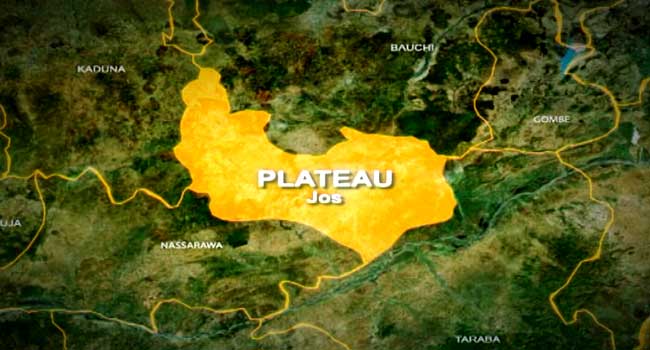
Yemi Kosoko traces the history of the over three decades-old communal clashes in Plateau state including last week’s killings in Angwan Rukuba in Jos, the state capital and moves by federal and state governments to frontally address the recurring problem.
The soft cool wind swept across Yakubu Gowon Airport with a chill that felt heavier than weather a chill shaped by grief, memory, and the ghosts of three decades of violence. As President Bola Tinubu stepped into the reception lounge in Jos, the air was thick with tension. Leaders from across Plateau State stood waiting, their faces marked by fatigue and the familiar dread that follows yet another attack this time in Angwan Rukuba.
This was not a routine presidential stop. It was a confrontation with history.
A President Facing a Wounded Land.
Tinubu’s voice, when he began to speak, carried the weight of a man who had reached his limit. “Why is the past not a source of lesson for us?” he asked, his gaze sweeping across traditional rulers, political leaders, and security chiefs.
“I don’t want to be here constantly to see killings and unrest. I want to be here to establish peace.”
There was no applause. Only the heavy silence of a room that knew the truth of his words.
The President reminded Governor Caleb Mutfwang of the mandate they share.
“We were elected on the promise of peace and prosperity not to comfort and create widows and widowers.”
It was a rebuke, a plea, and a challenge all at once. Then, in a symbolic gesture, Tinubu raised an object meant to represent the breaking of chains.
“I brought the symbol of this camp to break the shackle; the shackle of violence, ignorance, poverty, hopelessness. We must break it together.”
For a moment, the room seemed to hold its breath with everyone present ruminating through a crisis of three decades in the making.
To understand the weight of Tinubu’s words, one must understand Plateau’s long descent into conflict, a descent that began quietly in the 1990s and has since carved deep scars into the state.
Looking through the first cracks in the 1990s with tensions over land, grazing routes, and political identity simmered beneath the surface. The 1994 Jos North crisis exposed the first major rupture.
Then the turning point in 2001. A dispute at a mosque spiralled into days of bloodshed. Hundreds died. Plateau’s innocence died with them.
Thereafter, retaliation and State of Emergency of 2002–2004 as rural communities burned. The 2004 Yelwa–Shendam massacre forced the Federal Government to declare a state of emergency.
In 2008, Jos erupts again, local council elections triggered another wave of killings. Trust between communities fractured further. Followed by the 2010 Dogo Nahawa where over 200 people were slaughtered in a night of horror that still haunts survivors.
The period between 2011 and 2015 witnessed bombs and raids. Christmas bombings, night‑time raids. Entire villages emptied. The conflict grew more complex, more criminal, more unpredictable.
The assassination of the Saf Ron Kulere in Bokkos in 2016 deepened fears of targeted ethnic attacks. Closely followed with the 2018 Barkin Ladi mass killings of over 200 killed in coordinated assaults. The world took notice.
2020–2022 witnessed a fragile calm as brief period of stability returned. Investors tiptoed back. However, hope flickered with the 2023 Christmas eve massacres as more than 150 were killed. The cycle roared back to life.
And 2026, the Angwan Rukuba marks the latest attack. The latest heartbreak. The latest test of leadership.This is the history that stood silently in the room as Tinubu spoke a history that Plateau’s people carry like a second skin.
Governor Mutfwang rose to speak, his voice steady but heavy. He acknowledged the progress Plateau had made for the return of investors, the slow rebuilding of trust and the pain of seeing it threatened again.
“The incident of last Sunday is a temporary setback,” he said. “But by the grace of God, we will overcome and remain on our path toward peace and prosperity.”
He reminded the room that this crisis has confronted every governor before him — Dariye, Jang, Lalong and now it is his turn to face the storm.
Yet he offered a glimmer of hope.
“The gap in unity among our leaders is narrowing. We will join hands so that enemies of the state do not infiltrate our communities.”
On the streets outside the lounge of the stakeholders meeting, the rumble of military trucks echoed through Jos.
Earlier that morning, the Chief of Army Staff,(COAS), Lt. General Waidi Shaibu, had ordered the deployment of over 850 additional troops from Abuja and Kaduna. The reinforcements were absorbed into Operation ENDURING PEACE, a mission stretched thin by years of recurring violence.
At the Joint Task Force Headquarters, the COAS addressed the troops with a stern message: protect lives, restore calm, confront the killers. The Army had provided the logistics. Now, it was time for action.
For Plateau, Tinubu’s visit was more than a political gesture. It was a reckoning, a moment when the weight of 30 years of conflict collided with the urgency of now.
In Angwan Rukuba, families are still burying their dead. In Jos, fear lingers like smoke. But for the first time in months, there is also a flicker of something else: the possibility that the cycle might finally be broken.
Tinubu’s final words captured that fragile hope. “Our promise was progressive development not to bury, but to build.”
Whether Plateau rises from this latest tragedy will depend on unity, discipline, and resilience, the same qualities that have carried its people through three decades of turmoil. For now, the state stands at a crossroads bruised, grieving, but still fighting for the peace it once knew.


