
Breaking News


Has Africa Come of Age Now?
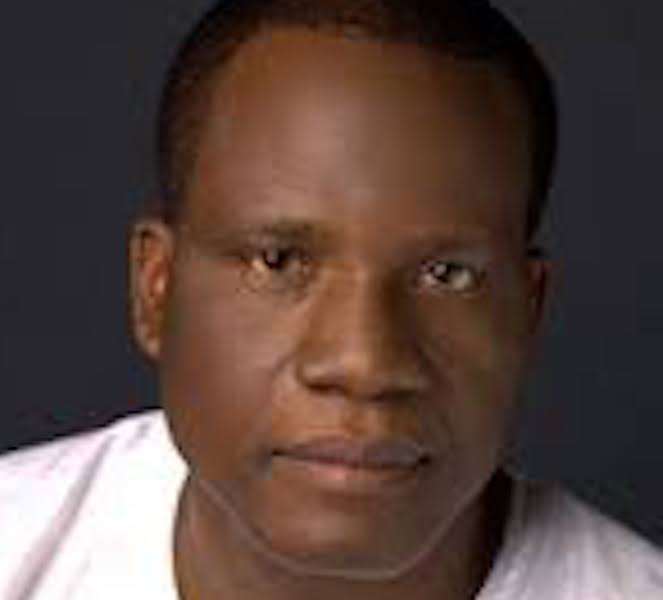
Kayode Komolafe
On Sunday, January 11, it was exactly 50 years that former Head of State General Murtala Mohammed made an anti-imperialist statement at a summit of African leaders in Addis Ababa in Ethiopia. He was killed in an abortive coup on a Lagos street 33 days later, on February 13, 1976. He was succeeded by General Olusegun Obasanjo.
In the exceptionally pan–African speech entitled “Africa Has Come of Age,” Murtala, who was 38 years old, said inter alia:
“Mr. Chairman, when I contemplate the evils of apartheid, my heart bleeds and I am sure the heart of every true blooded African bleeds. . . Rather than join hands with the forces fighting for self-determination and against racism and apartheid, the United States policy makers clearly decided that it was in the best interests of their country to maintain white supremacy and minority regimes in Africa. . .
“Africa has come of age. It’s no longer under the orbit of any extra continental power.
“It should no longer take orders from any country, however powerful. The fortunes of Africa are in our hands to make or to mar. For too long have we been kicked around: for too long have we been treated like adolescents who cannot discern their interests and act accordingly.
“For too long has it been presumed that the African needs outside ‘experts’ to tell him who are his friends and who are his enemies. The time has come when we should make it clear that we can decide for ourselves; that we know our own interests and how to protect those interests; that we are capable of resolving African problems without presumptuous lessons in ideological dangers which, more often than not, have no relevance for us, nor for the problem at hand.”
Among the leaders who attended summit of Organisation of African Unity (OAU) was the founding president of Zambia, Kenneth Kaunda. He was reportedly in tears of joy as he listened to a fellow African leader speak truth to American imperialism. The shower of emotions would be understandable given the context of the meeting of OAU, the precursor of African Union (AU).
The OAU meeting was to take a position on the support for the Movement for the Liberation of Angola (MPLA), the party in power in the southern African country that won independence in 1974. The par-ty was opposed by rival National Front for the Liberation of Angola (FNLA) and the National Union for the Total Independence of Angola (UNITA). Apartheid South Africa was in support of these MPLA rivals with the blessing of America. In the build-up to the meeting, American Ambassador in Lagos Donald Easum brought a letter from President Gerald Ford to Murtala. The purpose of the letter was to manipulate African opinion to withdraw support for MPLA government because it had the support of the old Soviet Union. That was a common feature of the era of the Cold War.
Obasanjo, as the Chief of Staff Supreme Headquarters, was said to be initially scheduled to deliver Nige-ria’s speech at the OAU summit, only for the Head of State, Murtala to change his mind on receiving the “insulting” letter from America.
At the end, Africa rose in support of MPLA and the rest as, they say, is history.
Little surprise that Murtala’s memory was specially honoured two years ago in Angola when the nation celebrated the golden jubilee of its freedom from Portugal.
The import of that rallying statement made by Murtala was that Africa rejected dictation from America 50 years ago.
The anti-imperialist fervour was palpable in the Nigerian public sphere in the 1970s. The military government and public intellectuals were united in the pan Africanist mission of decolonisation of the continent.
In 1979, the Murtala-Obasanjo military regime of Obasanjo nationalised the assets of British Shell Petroleum (BP) in Nigeria. This was done to speed up the independence of Zimbabwe on which the colonial master, the United Kingdom, was dithering. The United Kingdom wanted oil supplies to be steady for the apartheid South Africa, The rest of Africa had ostracised South Africa at the time. The support for the liberation struggles in Southern Africa was a matter of national consensus regardless of what imperialism felt.
The zeal for freedom of the 1970s was reminiscent of the anti-colonialist spirit of the immediate post-independence period when Nigerian youths, students and other nationalists stoutly opposed the Anglo-Nigerian Defence Pact. As a result, the United Kingdom was denied a military foothold in Nigeria.
The mood in Africa today is in sharp contrast to what was prevalent in 1976. African leaders are routinely summoned by the United States, European countries and even some countries of the South in the name of seeking investments. The other day, President Donald Trump of America invited five African presidents to Washington for interaction. In one moment during the meeting, Trump told an African president patronisingly that he spoke “good English” and asked which school the African head of state attended. Such is the total absence of dignity of purpose in the way Africa relates to America 50 years after Murtala’s speech. Even at the rhetorical level, bold statements have been replaced with massaging the ego of a bully. It is as if the pernicious role of imperialism has been deleted from the pages of African history. The study of the post-independence African history requires a greater rigour in a post-truth age when the youths assume that the full story could be told in a tweet or on Instagram. The matter is made worse by massive disinformation and distortion of historical facts.
This is important as Nigeria responds to the geo-political dynamics of the world at the take-off of the second quarter of the 21st Century.
The public sphere of 1976 was also vigorous with debates from which ideas were harvested to help in shaping foreign policies. Scholars of various ideological hues offered perspectives and campuses were intellectual barricades of the struggle for nationalism and freedom.
Outside the campuses think thanks were truly platforms for debates and discussions. For instance, the Nigerian Institute of International Affairs (NIIA) attracted prominent figures around the world who came to deliver lectures or participate in colloquiums.
So, as we recollect today the historical significance of a great speech that roused the pan-African spirit, it is important to emphasise the importance of rigorous public discussions of Nigeria’s foreign policy.
True to its tradition, the NIIA organised a forum last Tuesday on the implications of the January 3 ousting of Venezuelan President Nicolas Maduro by the United States. The American gunboat diplomacy has doubtless generated a global resonance. In different ways nations at various levels of power are expected to be concerned about the implications of upending the rules-based international order that has prevailed since the end of World War II.
So, it is appropriate that the NIIA is doing what is expected of serious think tanks in the situation: harvest ideas that could help in shaping policies. It is important that the implications of the unfolding developments in the world be properly understood.
At the roundtable held in Lagos, scholars, retired diplomats, analysts and other enthusiasts of global af-fairs had a robust discussion of the issues thrown up by the intervention. It was generally agreed that what happened on January 3 was not unprecedented.
The discussion ranged from “the history and catalysts” of the conflict to “the international law dimensions.” Useful suggestions were also made on the way forward without nursing any illusion that that there is any power out there that could stop America at it torpedoes the world order that has subsisted for 80 years.
The Director-General of NIIA, Professor Eghosa Osaghae, reminded the forum that while Venezuela might be geographically distant from Nigeria, the implications of the American attack should be troubling for developing countries. While Dr. Chinyere Rita Agu of the NIIA critically examined the action of United States within the context of international law, public intellectual and development expert, Magnus Onyibe, proposed that the world should begin to look for “alternatives” to the post-1945 rules-based order. A lawyer, Mr Femi Ojumu, emphasised the “dangerous precedent” of the American action. Former permanent secretary at the foreign ministry Ambassador Joe Keshi eloquently located the problem partly in the historical “over-dependence” of the international system on America in solving problems. Now America is deploying its raw power blatantly for selfish reasons. And the world is wondering.
The forum was chaired by former foreign minister Professor Bolaji Akinyemi, who as foreign minister over three decades ago had articulated the concept of “concert of medium powers,” an idea whose time seems to have truly come in the current geo-political deployment of powers on the globe. Akinyemi, who is also the chairman of the board of NIIA, set the tone when he observed that different nations had responded based on their interests and power relations. The nations that have been muted in their responses have strategic reasons for doing so. He explained that governments should not be expected to respond to the development the way commentators and activists would do. For instance, British Prime Minister Keir Starmer has refrained from condemning President Donald Trump for violating international law in the egregious assault on Venezuela. He is only calling for a “proper transition to democracy” in Venezuela after the abduction of the nation’s president and the killing scores of security agents.
Eminent political scientist Professor Adele Jinadu kicked off the roudable on a theoretical note examining the “notion of the world order” and the “evolution of the nation state.” Jinadu drew attention to the distinction between the government and the state structure. While governments could be elected or voted out periodically, the state is permanent. Indeed, there is a question on the lips of experts and non-experts alike: who will stop America? He cautioned that the “trees should not be mistaken for the bush.” In other words, the larger picture of the issues is important to grasp the implications of the intervention for the idea of state sovereignty; the new world order; the U.S. itself and the third world in general.
Specifically for Nigeria, Jinadu puts the implication like this: “The toxic internal environment within which politics is pursued as public policy needs to give rise to voluble alternative voice to the drumbeats of ethnic hate, now sliding towards religious hate speech encouraged by the political class.”
Another veteran political scientist, Professor Femi Otubanjo, illuminated the discussion highly, tracing the history America-Venezuela relations defined by oil interests to the first half of the 20th Century. He summed up things as follows: The US has the capacity for turning a friend into an enemy. The professor calls it transfiguration. During the World War II, Venezuela aligned with the America. American oil companies dominated the Venezuelan oil industry. During the cold war Venezuela was also ally of America. The ideological break came with the emergence of the socialist leader Hugo Chavez in 1999. Otubanjo demonstrated with facts of history that what is happening to Venezuela is not unprecedented
In 1976, Murtala proclaimed that “Africa has come of age.” Now, 50 years after that courageous declaration it can hardly be said that Africa has truly grown, much less developed. The reason is obvious. Murtala made his statement in the heat of the struggle for political freedom. But African economies re-main under the bondage of global capitalism. They are largely debtors taking dictation from their creditors. For instance, a decade after the Murtala declaration
the Structural Adjustment Programme (SAP) was imposed on African countries. Thus began the assault of neo-liberalism in the policy arena. In the decade that followed, neo-liberal experts trumpeted globalisation as the economic elixir, thereby gaslighting the African public. And as Lenin puts it, “imperialism is the highest stage of capitalism.” With Trumpism, you hardly hear the talk of globalisation, free trade, market forces and other neo-liberal shibboleths anymore. International law is even on vacation at pre-sent.
In sum, if Africa is to come of age, it must squarely adopt a political economy approach to its development. What Trumpism has put on display globally is that economic policies are not mere technical matters; there are political motivations to them at national and international levels.


