
Breaking News


A Night of Horror in Jos: But Who Will Act?
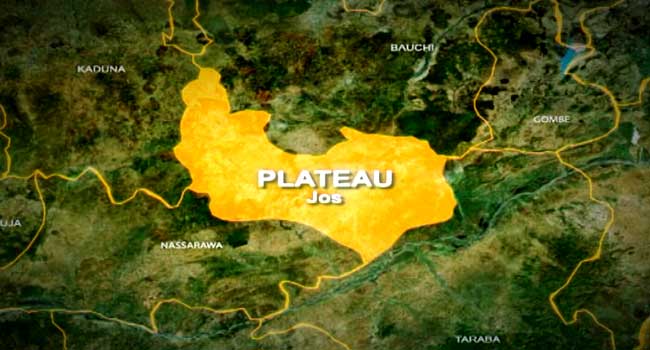
Iyobosa Uwugiaren writes that the killings in Jos on Sunday, is not just another incident but a recurring horrendous, one that exposes, yet again, the deep cracks in Nigeria’s security architecture.
On Sunday night in Jos, the Plateau state capital sorrow arrived before dawn. It sneaked through narrow side road and broken doorways, settling heavily on homes where laughter had echoed just hours earlier. By morning, mothers were no longer calling their children to wake—they were identifying lifeless bodies in Angwa Rukuba Junction and surrounding areas in Jos.
Survivors were whispering the names of the dead like prayers, each one a painful reminder that in Jos, death has become too familiar, and safety too distant.
By morning – the next day, more than 40 lives had been snuffed. Even the arrival at the scene of Plateau State Governor, Caleb Mutfwang, could not comfort the grieving relatives of the victims. His presence, though important, did little to ease the raw agony or quiet the boiling anger of a community once again left to mourn its dead. And like someone said, it was unambiguous reminder that leadership, too often, appears after the tragedy—not before it.
For the people of Plateau State, this is not just another incident—it is a recurring horrendous. One that exposes, yet again, the deep cracks in Nigeria’s security architecture. Security experts have argued that what happened in Jos was not merely an attack; but a “systemic failure of intelligence, of coordination, and ultimately, of leadership.’’
At the heart of this tragedy lies a familiar weakness: intelligence failure. Because, attacks of this magnitude do not occur in a vacuum. They are often heralded by warning signs—unusual movements, rising tensions, even clear threats.
Yet, time and again, these signals are either missed or ignored. There are clear indications that Nigeria’s intelligence system remains fragmented, with agencies reluctant to share information or synchronize efforts. The result is predictable: a reactive attitude that arrives only after lives have been lost.
Equally troubling is the persistent lack of coordination among security agencies. The military, police, Department of State Services, and other paramilitary outfits are all present, at least in theory, but presence without synergy is inefficiency. In moments of crisis, confusion over command structures slows response time, turning critical minutes into deadly delays. The Jos killings once again highlight the urgent need for a unified command framework in conflict-prone regions.
There is also the issue of capacity. The Nigeria Police Force, constitutionally mandated to secure internal peace, is overstretched and under-resourced. Officers are too few, poorly equipped, and often inadequately trained for the complex challenges they face. In many rural and semi-urban communities across Plateau State, security presence is thin—sometimes nonexistent. This vacuum creates opportunities for attackers, who strike with precision and retreat with ease.
Natural features compounds the problem. Plateau’s rough terrain, scattered settlements, and difficult access routes provide both cover and escape paths for the evil men. Without advanced surveillance tools such as drones and real-time intelligence systems, security forces are left navigating blind spots. It is an uneven contest—one side swift and familiar with the terrain, the other constrained by logistics and outdated technology.
Beyond these operational deficits lies a more eroding issue: the erosion of public trust. In many communities, security agencies are no longer viewed as reliable protectors. Allegations of delayed responses, bias, or even complicity have deepened suspicion. Conversely, security personnel often lament the lack of credible intelligence from locals. This mutual distrust weakens the very foundation of effective security, which depends on cooperation between citizens and the state.
Compounding these challenges is the proliferation of small arms and light weapons. Nigeria’s porous borders have allowed a steady influx of illegal firearms, empowering not only organized criminal groups but also local militias. Conflicts that might once have been controlled now escalate rapidly, becoming deadlier and more difficult to manage.
The politicization of security further complicates matters. Decisions about deployment and response are sometimes influenced by political calculations rather than strategic necessity. In a fragile environment like Plateau State, perceptions of bias can inflame tensions, deepening divisions and undermining the legitimacy of the state. Security must not only be effective—it must also be seen to be fair.
In response to these failures, many communities have resorted to vigilante groups and self-help arrangements. While these can provide immediate protection, they carry significant risks. Poorly regulated, they can become instruments of retaliation, perpetuating cycles of violence. Integrating such groups into a formal, accountable framework remains a delicate but necessary task.
Yet, perhaps the most fundamental issue is that security agencies are often deployed to manage crises that are not purely security-related. The conflicts in Plateau State are rooted in a complex web of land disputes, identity politics, economic marginalization, and historical grievances. Soldiers and police can suppress violence temporarily, but they cannot resolve these underlying tensions. Without parallel efforts in dialogue, development, and inclusive governance, peace will remain elusive.
This is where leadership becomes decisive. As Commander-in-Chief, Bola Tinubu bears ultimate responsibility for the safety of Nigerian lives and territory. That responsibility is not symbolic; it is constitutional and moral. The recurring bloodshed in Plateau State, climaxing in the latest killings in Jos, demands more than routine condemnation. It requires decisive, visible, and sustained action.
The President must urgently recalibrate the nation’s security strategy. First, there must be a clear directive for improved intelligence coordination, breaking down the silos that have long weakened efficiency. Second, a unified command structure should be established in high-risk zones like Plateau State to eliminate operational confusion. Third, rapid deployment units, equipped with modern surveillance technology, must be strategically positioned to respond to threats in real time.
Beyond security deployments, the Tinubu administration must also confront the structural drivers of violence: investing in economic opportunities that reduce incentives for conflict. Security cannot succeed in isolation from governance.
Equally critical is accountability. The President must ensure that security failures are investigated transparently and that those found wanting—whether through negligence or complicity—are held accountable. This is not about assigning blame for its own sake; it is about restoring public confidence and preventing recurrence.
Technology offers a path forward, but only if it is embraced intentionally. Modern security challenges demand modern tools—data analytics, surveillance systems, and efficient communication networks. Nigeria cannot continue to rely on outdated methods in an era of evolving threats. Investment in technology must go hand in hand with training and institutional reform.
Equally important is the establishment of effective early warning and rapid response systems. Communities often sense danger before it erupts, yet there are few structured channels to translate these warnings into timely action. Security experts have consistently advised that building such systems—rooted in community participation and supported by technology—could significantly reduce response times and prevent attacks.
The killings in Jos are a national tragedy, but they must also be a turning point. For the people of Plateau State, the grief is immediate and weighty. For the rest of the country, the question is whether this moment will fade like so many before it—marked by outrage, followed by silence—or whether it will compel those in authority to act with the urgency the situation demands.
For President Tinubu, the moment is defining. The duty to protect Nigerians is the foremost obligation of his office. The time to act—decisively, comprehensively, and transparently—is now. Anything less risks condemning the nation to an endless cycle of mourning.


