
Latest Headlines


AI, JOB GAINS AND LOSSES
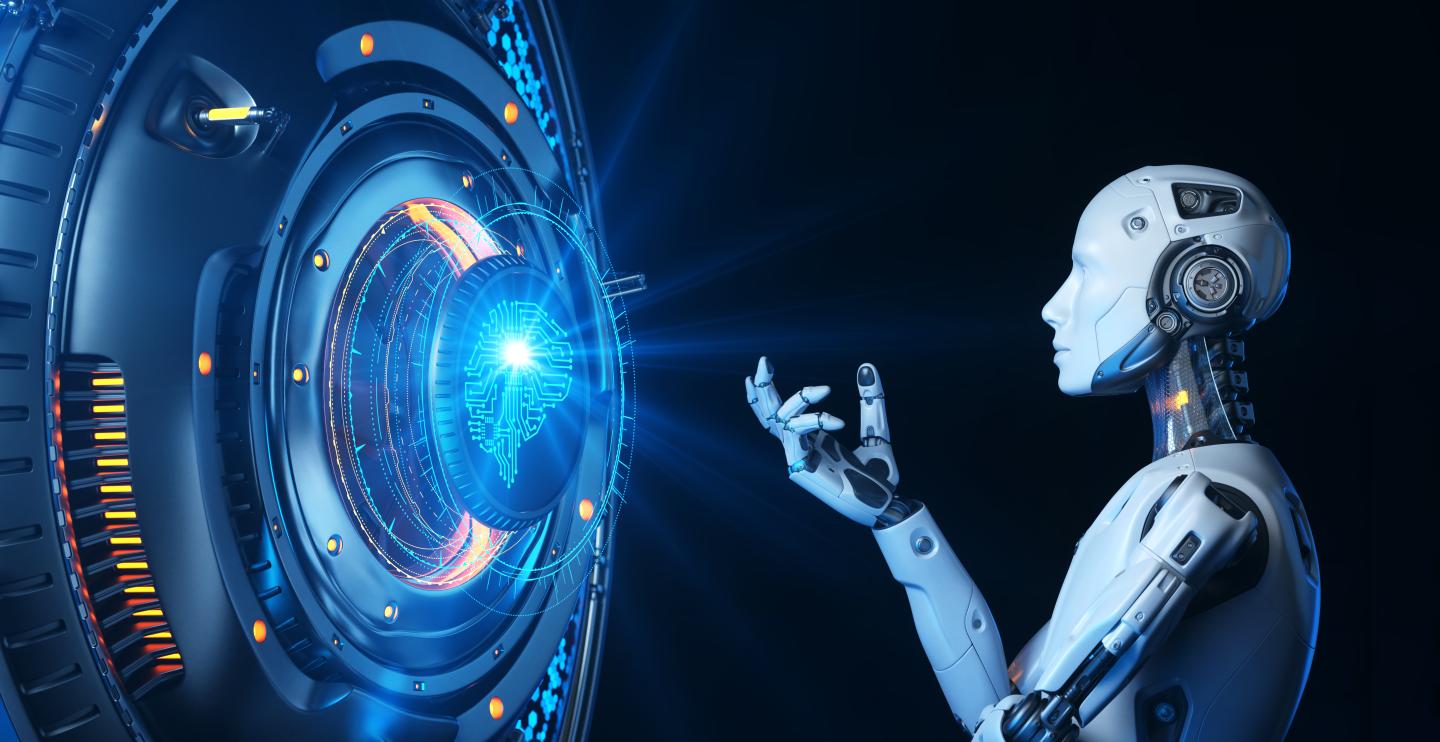
There is nothing to worry about. AI is helpful tool for bridging gaps, writes SONNY ARAGBA-AKPORE
A little over a week ago, a webinar held with a thematic discussion on the Artificial Intelligence (AI) and healthcare in Africa. With the advent of AI globally, fears have been expressed in strong terms that jobs will be lost to it, especially in the medical field and across the workplace. But the webinar dispelled the sceptics’ belief that there is nothing to worry about. While AI appears to be a visible threat, the hosts of the webinar told participants that medical personnel and medical practices, with all their protocols, will be complemented by AI, and that it will be a win-win for medicine.
The webinar hosts, Newmark, with the theme “AI in Healthcare: Opportunities and Challenges,” told participants that AI’s growing presence in hospitals and national health systems is intended to strengthen clinical decision-making, not sideline medical professionals. Co-Founder of RX Health Info System, Daniel Marfo, recalled how unthinkable such a conversation would have been just five years ago. Marco explained that “Healthcare is built on protocols, training and years of experience. So naturally, there was scepticism.” But what we are seeing now is that AI is sharpening clinical focus, not replacing it.” According to him “in many hospitals today, AI tools are embedded within Electronic Medical Records, ( EMRs) as doctors document patient symptoms and history, AI assistants can suggest possible diagnoses, highlight patterns and prompt additional questions that may otherwise be overlooked in a busy clinic” adding that “AI helps doctors process large volumes of information within limited consultation time,” stating further that, “it does not make decisions, it supports the decision-maker.” The webinar suggested that AI is helpful, especially for bridging gaps in wait times for unavailable specialists. “In some facilities, where patients wait days because a specialist is unavailable, AI tools are helping to bridge that gap by offering preliminary insights that clinicians can act on quickly.” AI does not issue definitive diagnoses independently. Rather, it functions as a second set of eyes, enhancing accuracy and efficiency. “Beyond clinical interpretation, AI is easing administrative pressures that often drain healthcare professionals’ time and energy. “From automated medical transcription to intelligent claims-processing systems in health insurance, AI is reducing paperwork, cutting delays and allowing doctors to devote more time to patient care instead of documentation.” Though participants expressed great fears about possible job losses not only in the medical field but also in other professions, these fears were allayed earlier by the International Telecommunications Union (ITU). On December 2, 2025, the ITU held a standardisation conference in collaboration with other global standardisation organisations to address standards for AI technology and its impact on humanity. The organisations signed a working statement to guide all. Known as the Seoul, South Korea statement, these international standardisation bodies pledged to cooperate on standards for artificial intelligence (AI), aiming to help build an open, sustainable and secure future for all. At the global conference, the International Electrotechnical Commission (IEC), the International Organisation for Standardisation (ISO), and ITU issued a joint commitment to advance the well-being of humanity through AI standards. This International Summit on AI Standards explored the complex challenges posed by AI and the opportunity to bridge digital divides through effective international standards. The Seoul Statement enshrines a joint approach by the three organisations to advance AI standards for the benefit of everyone worldwide. “Standards are technical tools to uphold the principles we want to live by,” said Seizo Onoe, Director of the Telecommunication Standardisation Bureau at ITU. “The vision set out by this joint statement calls for diverse expertise and global commitment to collaboration and consensus – exactly what drives our standards work and exactly the spirit needed to create the future we want.” The statement set out a joint vision and commitments from ITU, ISO and IEC on how technical standards can support the development and deployment of trustworthy AI systems that benefit society, drive innovation, and uphold fundamental rights. “AI has the potential to bring profound benefits to people and economies across the globe,” said ISO President Sung Hwan Cho. “But to ensure this potential is realised equitably and responsibly, International Standards are essential. This joint statement reflects our commitment to strengthening cooperation across our organisations to deliver relevant, robust and human-centric standards that guide the responsible design and use of AI technologies.”
The summit brought together over 300 participants from 65 countries to share perspectives from government, industry, academia, civil society, the public and private sectors, international organizations and UN agencies. Reliability and sustainability are crucial for standards to advance the global good. So is respect for human rights. “The rapid rise of AI confirms a basic truth: technology is always about people,” said IEC President Jo Cops. “As AI becomes central to the global economy, we must urgently establish a guiding framework. This joint commitment underscores the value of international standards as the blueprint for safe, trustworthy, and people-centred AI development.” Like in medicine, so it is in other professions because the most valuable workers in future will likely be people who use AI as a tool rather than compete against it. Many hands-on jobs will ride on technology to grow. For instance, jobs of electricians, renewable energy technicians, and advanced manufacturing technicians, among others, will survive in the age of AI. Human and AI designers interact with AI tools, making systems easier and more intuitive for us. These include voice assistants, AI dashboards and intelligent apps. These jobs will be elevated by AI. Prompt engineers specialise in communicating effectively with AI systems to get high-quality outputs.
These engineers design AI writing, coding, and research automation workflows using AI tools. AI product managers lead teams to build with AI features, managing engineers and designers to align technology with day-to-day business goals. As automation increases, robotics engineering becomes more valuable in factories, hospitals, agriculture, and delivery services.
In the same vein, cybersecurity experts are now in high demand to protect systems from hacking, data breaches, and cyber warfare. Since AI has become a very powerful tool, corporate organisations need experts to ensure systems are fair, safe, and unbiased by institutionalising AI ethics, to help address manifest issues, to check for discrimination in algorithms, privacy concerns, and responsible AI policies within the organisation to ensure they are not abused. Machine Learning Engineers are currently in high demand to develop algorithms that enable machines to learn from data and improve automatically. Industries using these include healthcare, finance, autonomous vehicles, and e-commerce. Data scientists are also in high demand, as companies rely heavily on them because AI systems depend on good data to manage statistics, machine learning, and programming.
Aragba-Akpore is a member of THISDAY Editorial Board


